
Bubble, Bubble; Green Electric Ontario; a Fast 1970s Mercedes.
June 1, 2026 Volume 7 # 10

A History of Stock Market Bubbles.
It’s obvious we are near the peak of the current bubble.
Let’s go through each of them.
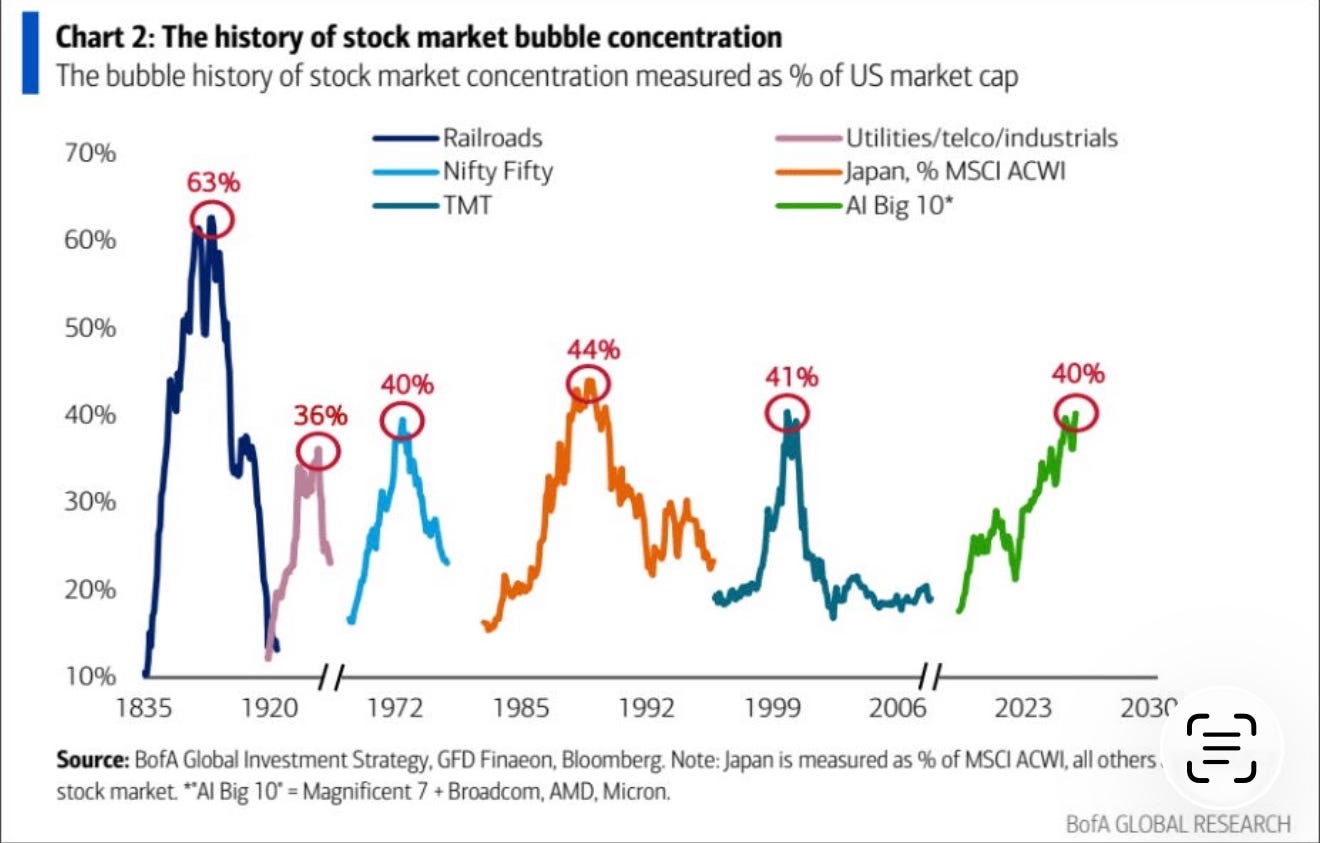
The Railroad bubble in the United States peaked in 1873 with the Panic of 1873.
It resulted in a run on banks, as in this illustration at the time.
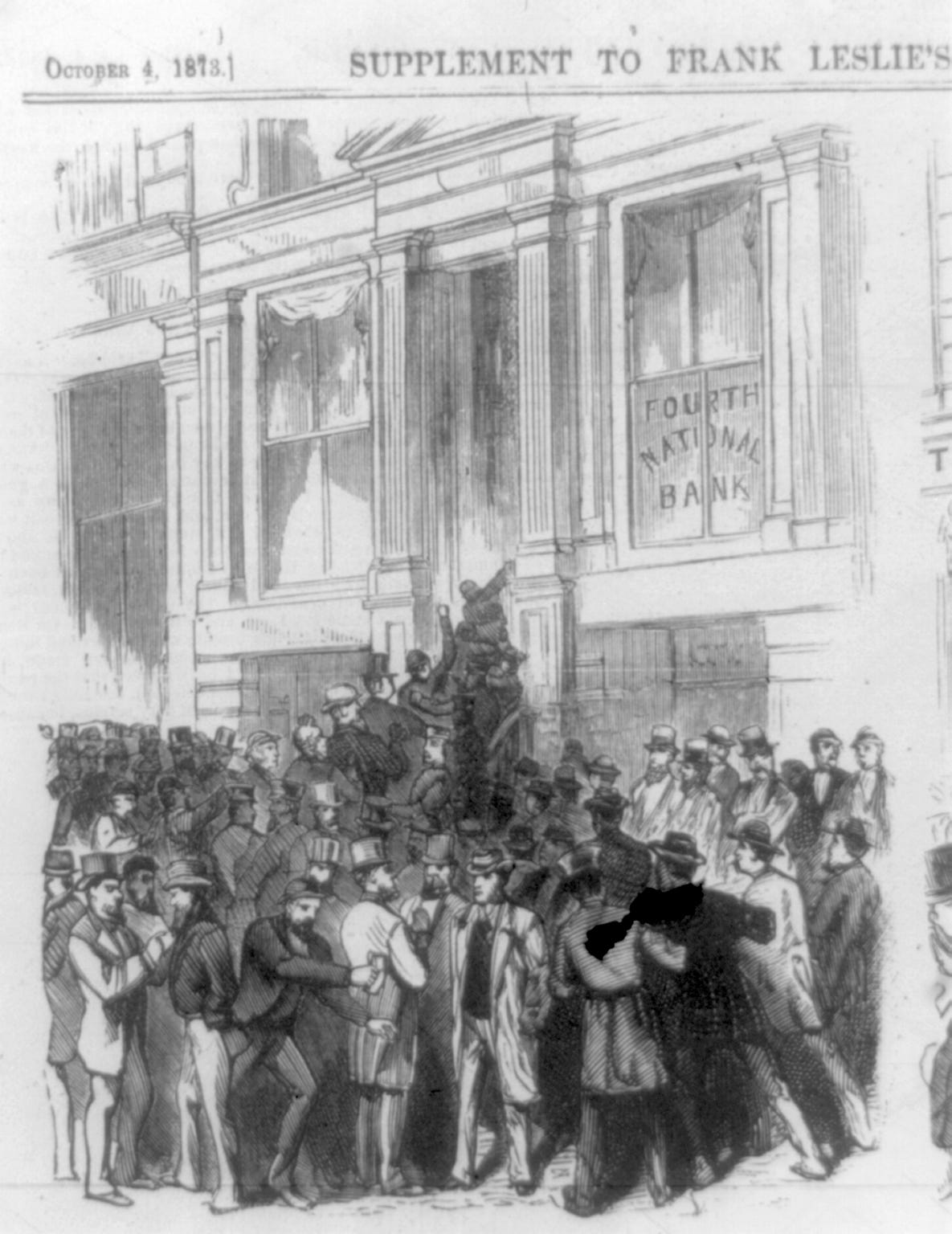
There had been a lot of borrowing to finance railroads. They were overbuilt and when the Northern Pacific Railway went belly up, the stock market collapsed. The recession lasted until 1879. There was an earlier railroad collapse in Britain.
Roaring 20s Bubble. In 1920 only 30% of American households had electricity. It was 70% by 1930. Radio was huge, building giant firms like RCA, Radio Corporation of AMerica. Telephones entered more homes and businesses. All thier stocks were hot and the companies were levereged to the eyeballs in debt.
Ordinary people bought stocks, often on margin. The story goes that early in 1929 Joseph Kennedy got a stock tip from a man shining his shoes. He sold everything and shorted the market— bet that things were going lower. He became even richer.
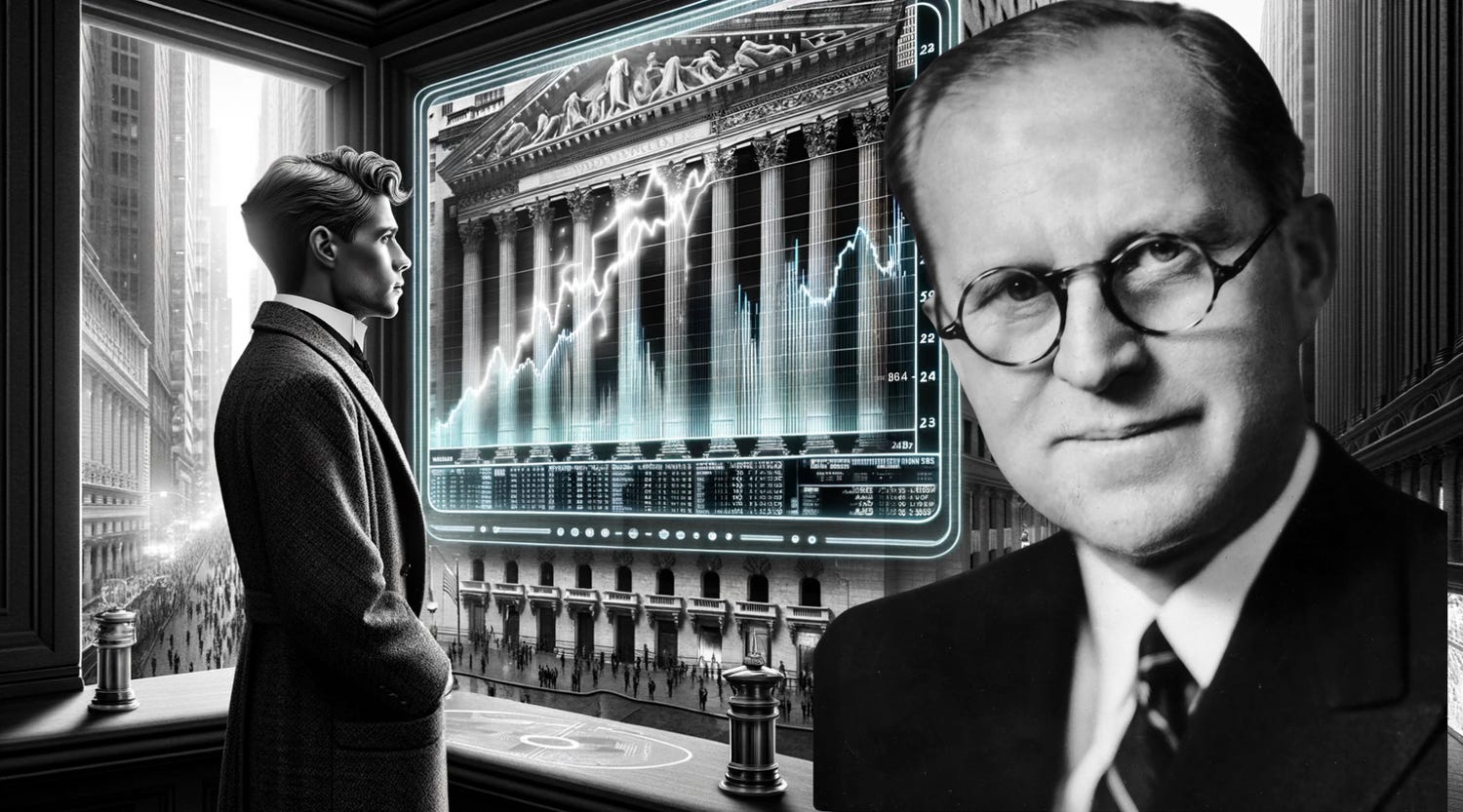
The crash or 1929, and the dumb protectionist laws in the U.S. led to the Great Depression and probably the election of Adolf Hitler.
The Nifty Fifty Bubble. After the war America boomed from IBM to Texas Instruments, Poloroid and Xerox. Too many people bought into a sure thing and the market crashed in 1973. Another recession. Many of the Nifty-fifty stocks thrived, such as Wal Mart and IBM. Polaroid and Xerox didn’t.

The Japanse Bubble.
“THERE was a time when the price of the land surrounding Japan's Imperial Palace (about the size of Disneyland) was said to be worth more than the whole of California.” That sentence from the Economist gives you an idea of the ridiculous overvaluation of real estate and stocks of Japanese companies, from Sony to Toyota, that dominated world markets.
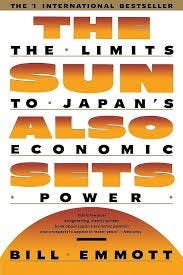
Bill Emmott, at one stage the Tokyo correspondent of The Economist published this book in January of 1989. It was a best seller, especially in Japan. And it it predicted the crash. Bill Emmott, who I worked for as a stringer for the Economist, told me it made him a lot of money. And landed him the top job as editor.
The Dot-Com Bubble. Perhaps the best known bubble to people who alive today. If you put dot-com after a name its price soared. Princeline.com, which never reported a profitable quarter by the year 2000, hit a market value— its stock price multiplied by the number of shares outstanding— of $22-billion, worth more than all the airline stocks. Pet.com was worth $300-million. It turned into nothing. Hype was everywhere.
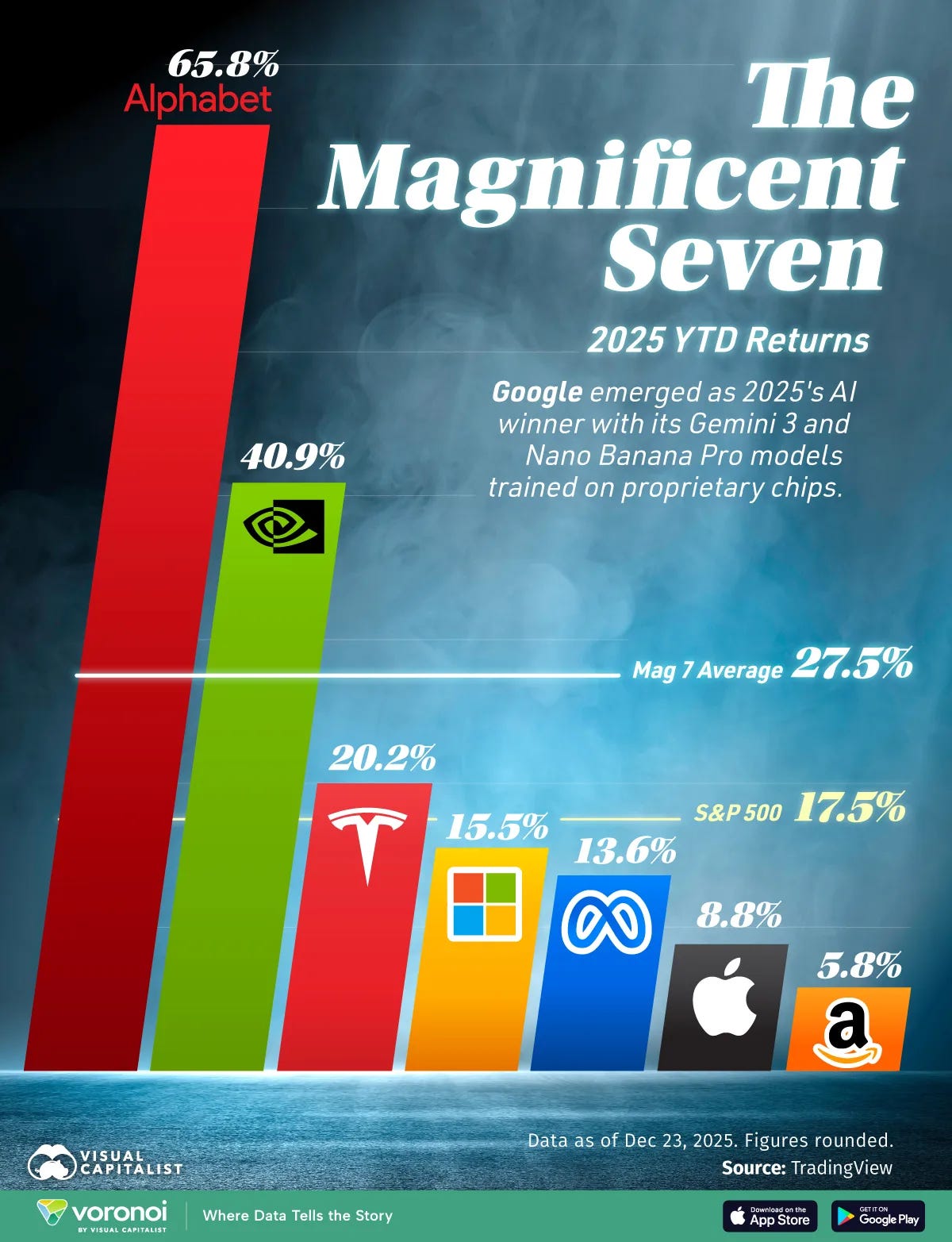
The Artificial Intelligence Bubble. We are still in it. Some of the Magnificent Seven, such as Microsoft and Nvidia, have sold off a bit lately. Lots of talk about the end being near, but when a collapse comes it usually happens so fast people don’t have time to get out. Unless they have Joseph Kennedy’s timing.
Can last year’s hot stocks have another boom year? They are: Alphabet, Nvidia, Tesla, Microsoft, Meta (Facebook), Apple and Amazon.
Rich Living
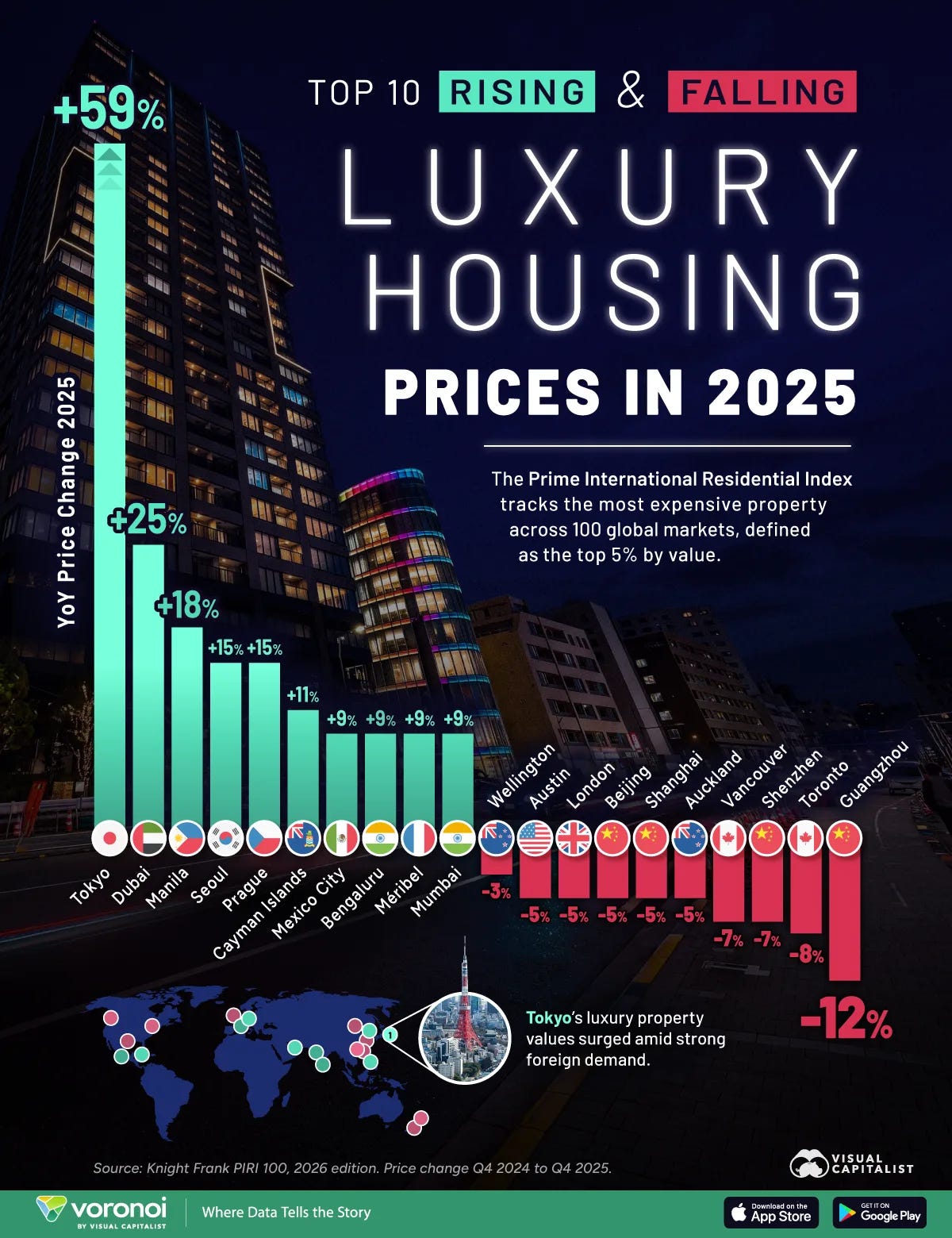
Cities where the bubble has already burst and others that might be about to. I imagine Dubai has already taken a bit hit. Hard to believe Tokyo property being driven by foreign demand.
Looks Like Net Zero to Me
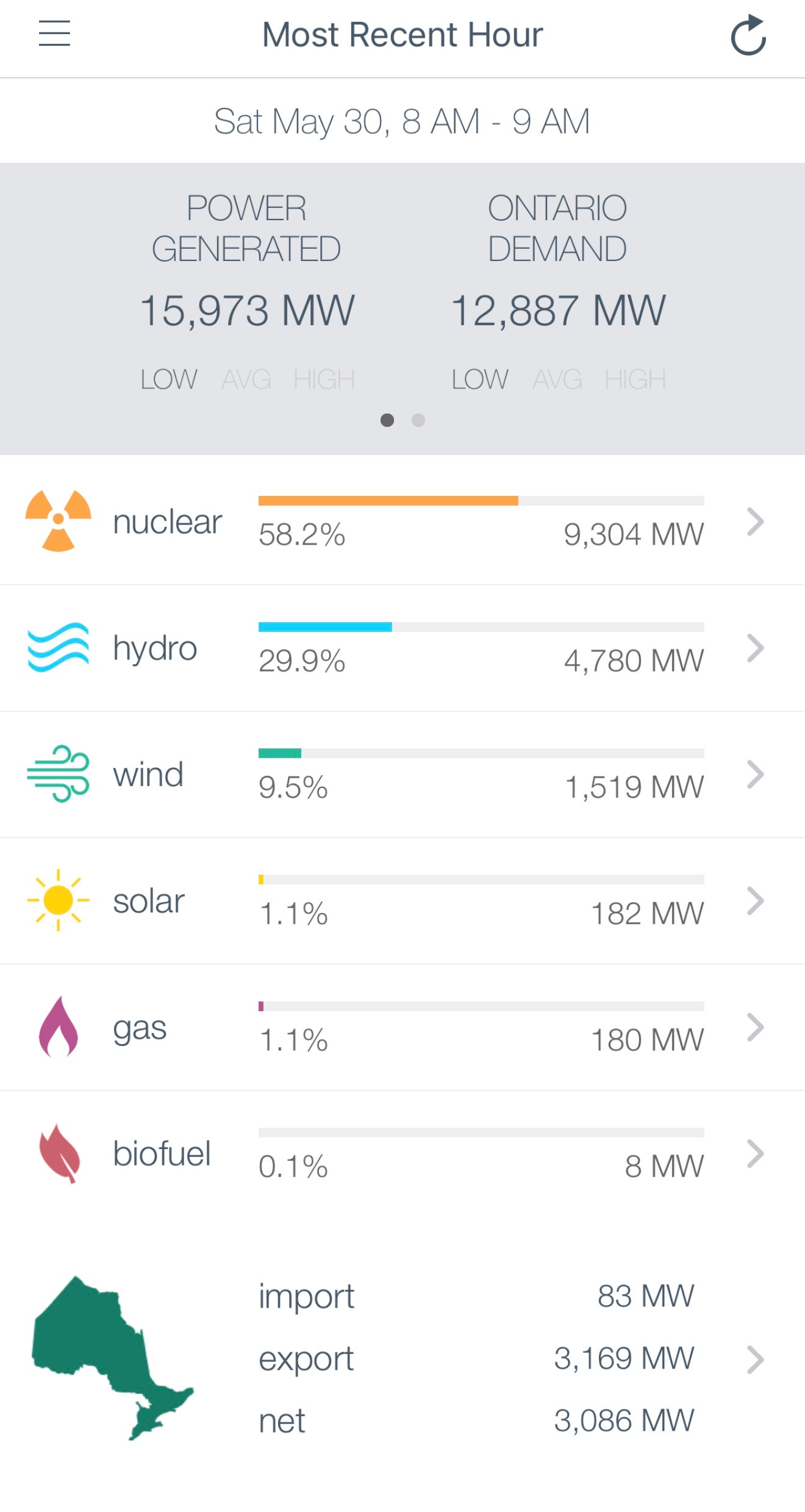
This is a picture of this Saturday morning, a snapshot of how electricity was being produced in Ontario, Canada’s industrial powerhouse and most populous province: 98. 8% green. The website is Gridwatch
Essay of the Week
For many years I wrote a car column for the National Post. Since I was on staff at the CBC, news executive Don Knox said I could write under my own name as long as I didn’t take loaner cars for review. One of the ways I would find interesting cars to write about was to leave my business card under the windshield wiper with a note on the back saying I was interested in writing about your car. This is what I did with this Mercedes 300SEL 6.3. Turns out the owner went to school in Montreal with my cousin Peggy. Here’s the story. I can’t find the photo that went with it, but I did find something on the net.
*****
You might call this the thinking man’s muscle car. Back in November of 1968 Road and Track called it “Merely the Greatest Sedan in the World.”
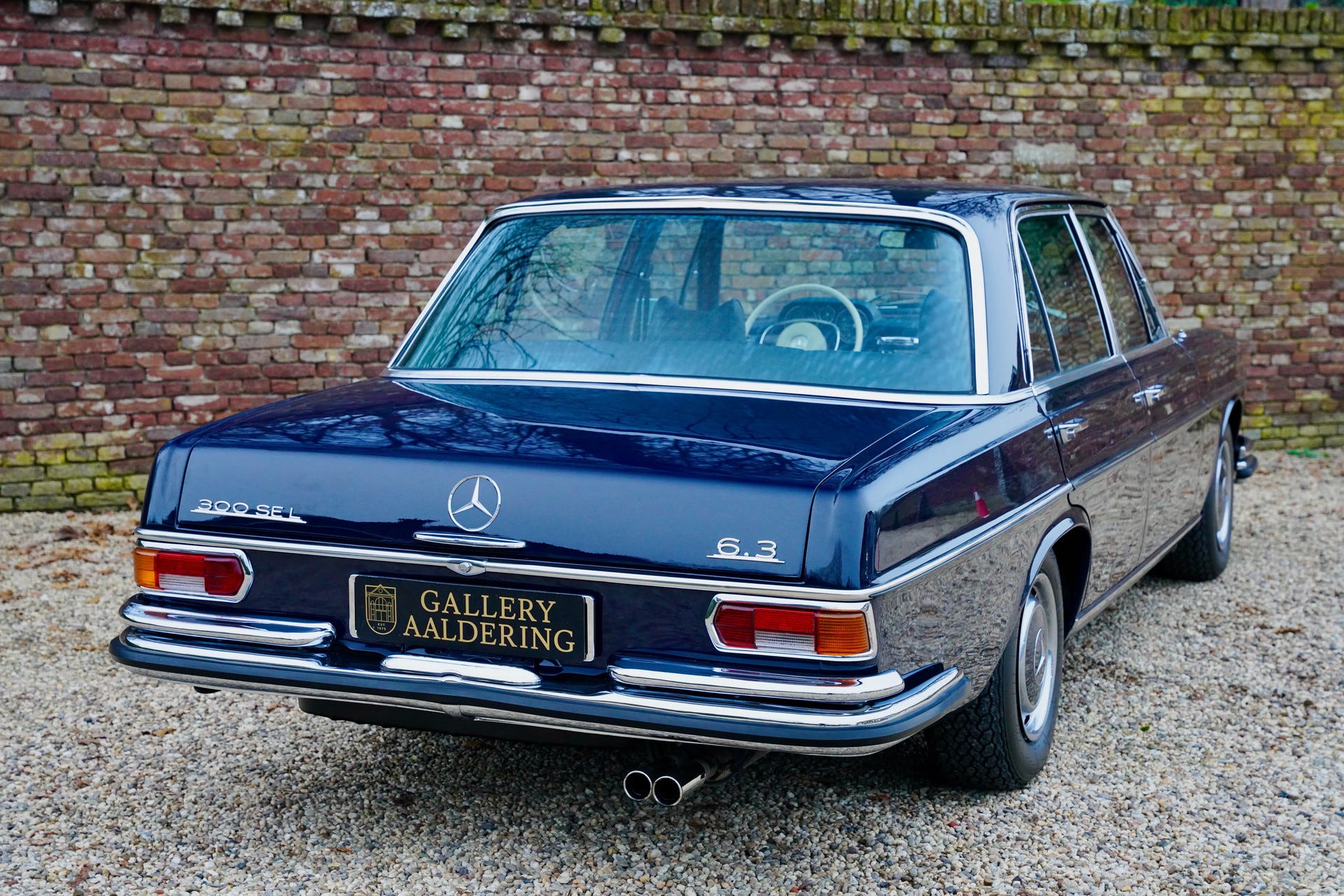
There is nothing flash about it, just the standard Mercedes 280 sedan body style of the 1960’s stretched by four inches. About the only thing that sets it apart is the chrome 6.3 on the right side of the trunk lid.
The car is the Mercedes-Benz 300SEL 6.3, in its day the fastest four door sedan in the world. Mercedes made it fast by stuffing the 6.3 liter v8 engine from its giant Pullman limousine into the 300 series. That gave it 300 horsepower, enough to push you back into your seat and with 435 lb-ft of torque, more oomph than a modern Chrysler 300C Hemi.
The sleeper. The giveaway is the 6.3 on the trunk lid, advertising the huge engine.
Not only could it out run the American muscle cars, it was faster than any 911 Porche of the era. The old Mercedes 6.3 did zero to 60 mph in 6.9 seconds and had a top speed of 131 mph. Those numbers are as tested by Road and Track. Mercedes claimed the car had a top end of 140 mph. This car weighs just over 2 tons.
“This is faster than a 396 Camaro and as fast as a 440 `6-pack’ Road Runner,” says Randy Crooks, a man who sells tombstones in Lake Echo, Nova Scotia, and who is the acknowledged expert on the 300SEL 6.3 in Canada. “It is the ultimate sleeper car.”
Another expression for sleeper is `Q Car’. It means that sitting a stoplight no one could ever guess how fast this thing is going to take off. I tried it myself the other day in a 300SEL 6.3 so mint it looked and sounded as if it just came out of the showroom. I didn’t have a stop watch, but from a standing start I was at the speed limit in a flash. It was nowhere near as smooth as a modern car, but then it is 35 years old.
The car is owned by Bill McNamara, a Toronto lawyer who drives his 1970 6.3 every day. He has even put four snow tires on and driven it in the winter, but after the latest paint job leaves it garaged on snowy days. McNamara is probably the only person in Canada who uses a 300SEL 6.3 as a daily runner. That according to Randy Crooks who says there are fewer than 15 of them in the country.
McNamara bought his car from Crooks in 1999 for $8,000. He fell in love with the car in the early 70’s when one of his father’s friends let him take one out for a ride.
“I’m not sure if I even had my licence back then,” remembers McNamara. “He told me to gun it and we were doing 85 mph in no time. Ever since then I wanted one.”
Everything works, from the air conditioning to the stock radio. McNamara won’t say how much he has spent on the car, out of a combination of modesty and embarrassment, but it is expensive to keep on the road. The biggest mechanical job was a transmission overhaul at around $4,000. The car was in the shop for 6 months getting painted. It looks new, and that can’t have been cheap.
Parts are hard to find, and McNamara had a spare car for a while just for parts. He uses a Mercedes dealer to do the work
“It’s expensive, but there’s a mechanic there who knows the car.”
The car has a number of things you have know about. A unique airbag suspension; a Bosch mechanical fuel injection system and a transmission that was designed in 1964.
Randy Crooks figures there are two types of people who can afford to drive a car like this. “People with deep pockets, or people like me who know how to fix them,” says Crooks who is a master mechanic.
Strangely enough, the cars themselves don’t cost that much.
“They don’t fetch a huge amount in the market unless they’re mint,” says McNamara.
There aren’t many for sale, and prices are all over the map. There were 3 on E-Bay. The most expensive was a 1969 model from a dealer in Hamburg, Germany, and the bid was US $21,000, though it probably went for more. Hemmings Motor News had two: one for US$15,900, the other for US$45,000. It is listed as mint, so that is probably the price for a top 6.3.
“I know that car,” says Crooks. “You could get a mint one for $20,000 though. People are afraid of them. But they’re pretty reliable for a car that old.”
While Bill McNamara may drive his car every day, Randy Crooks takes his two out only for fun. And he’ll probably buy and sell a few more down the road. His every day car is a Toyota Corolla. He ran his last one for 600,000 kilometres.