
May 11 2026
May 11 2026 Volume 7 # 7

Genoa
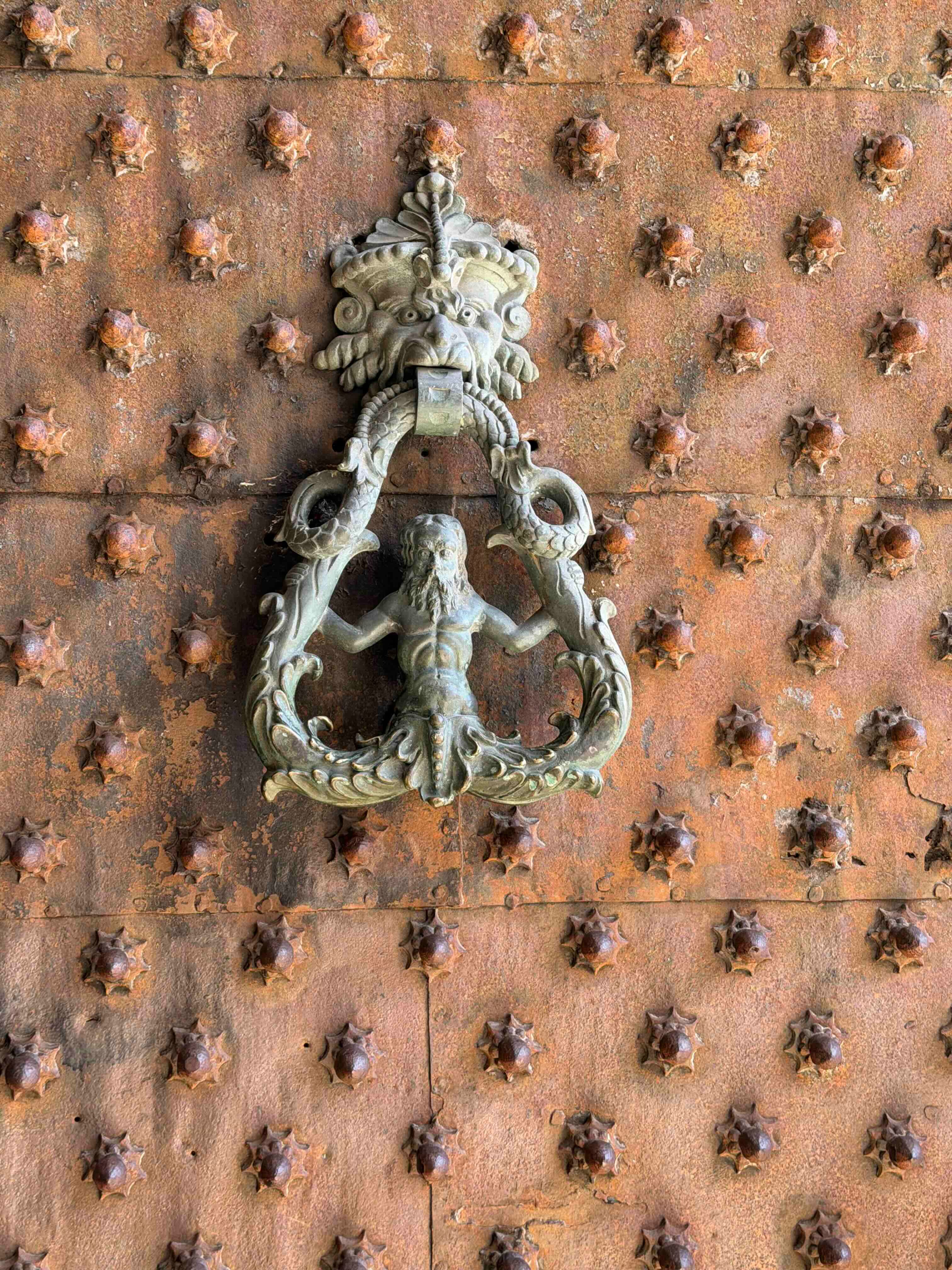
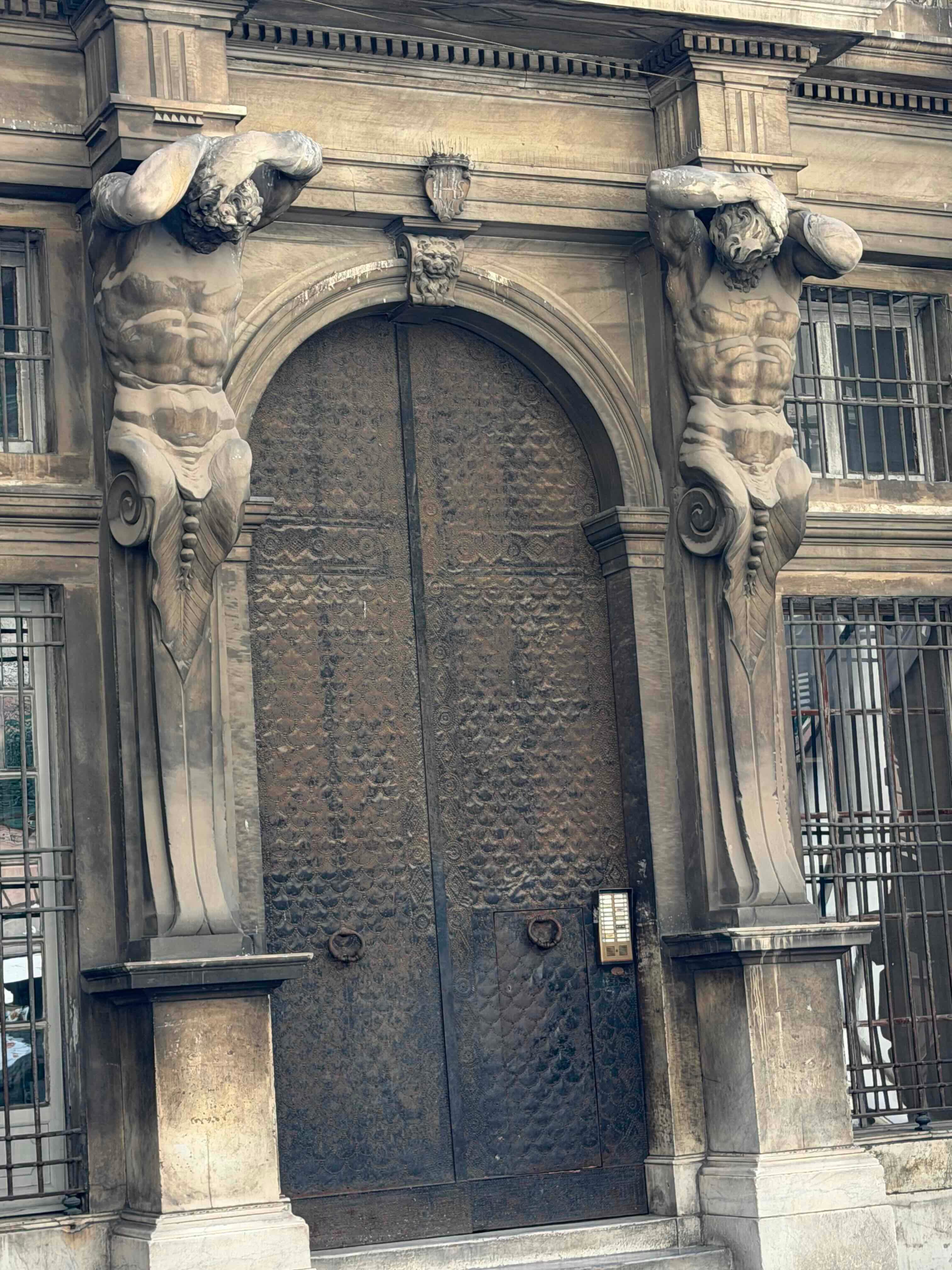
The door knocker at the Ducal Palace in Genoa tell us you the Republic of Genoa was a maritime power from 1099 until 1797. The man who ruled it was the Doge of Genoa.
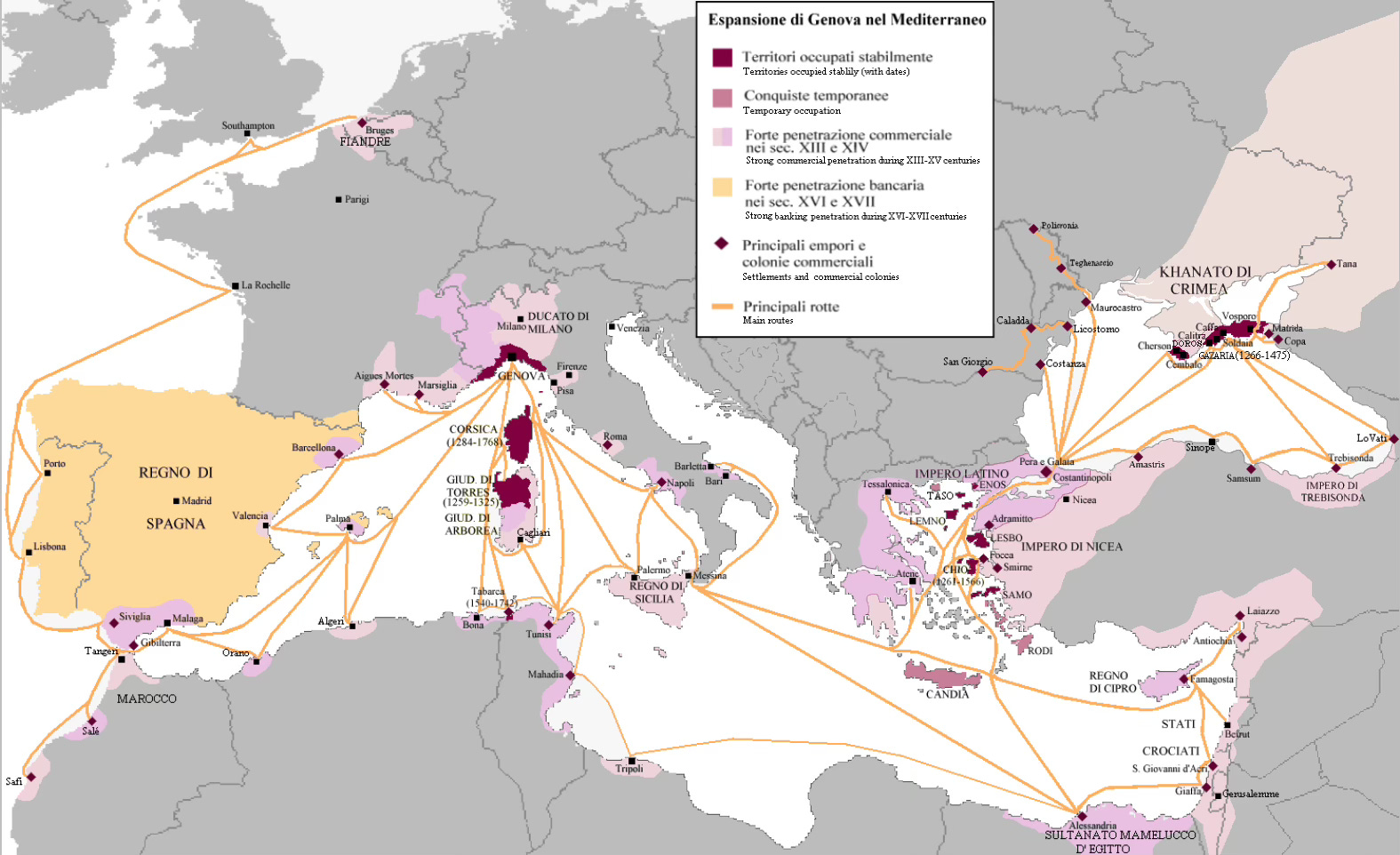
This is a map of the Republic of Genoa at its peak, when it rivalled Venice. The dark red colours are the Republic’s possessions with dates and its trade routes. Interesting that it occupied Corsica for so long. It was the most famous Corsican of them all, Napoleon, who put an end to the Republic of Genoa in 1797.
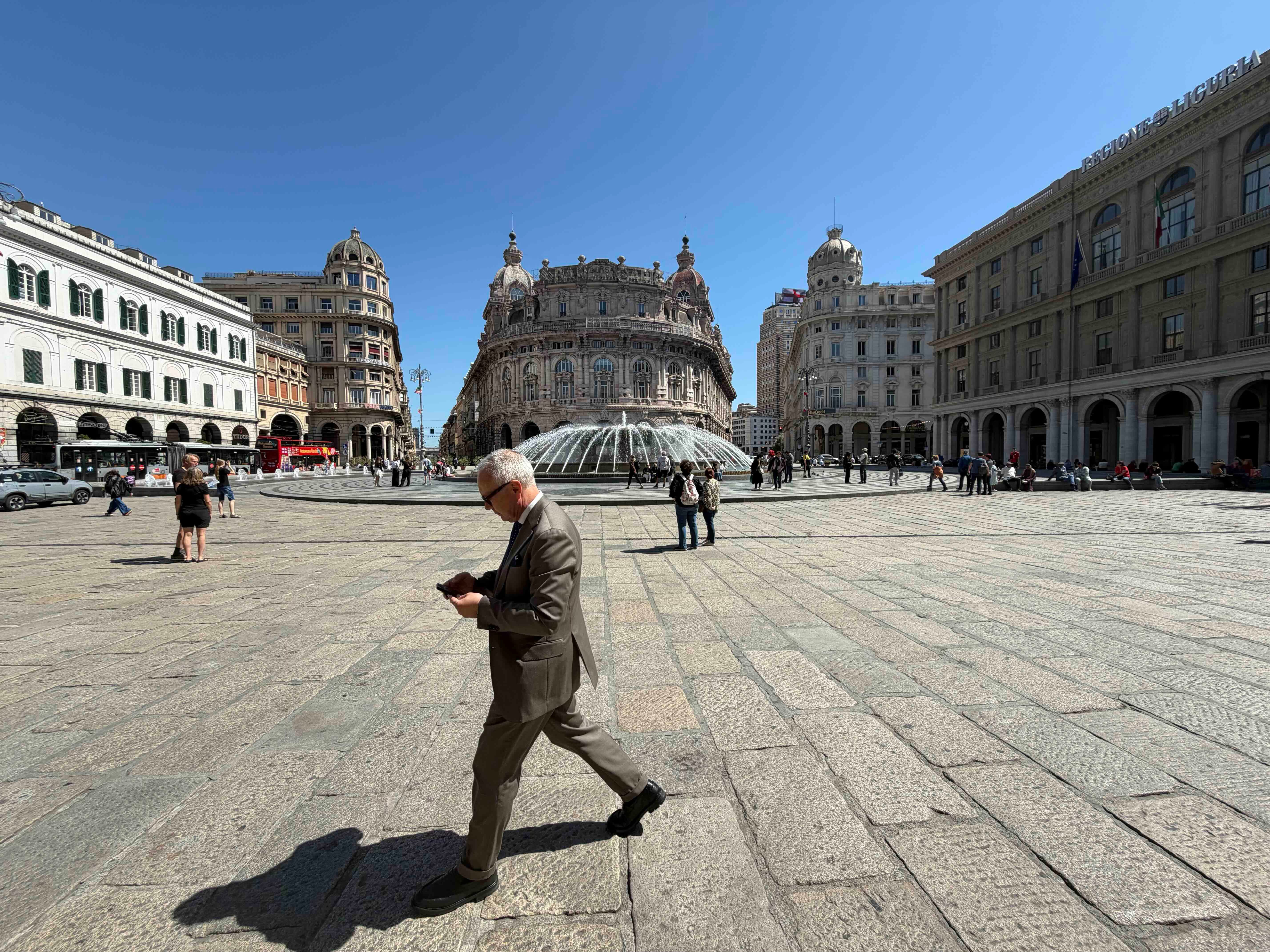
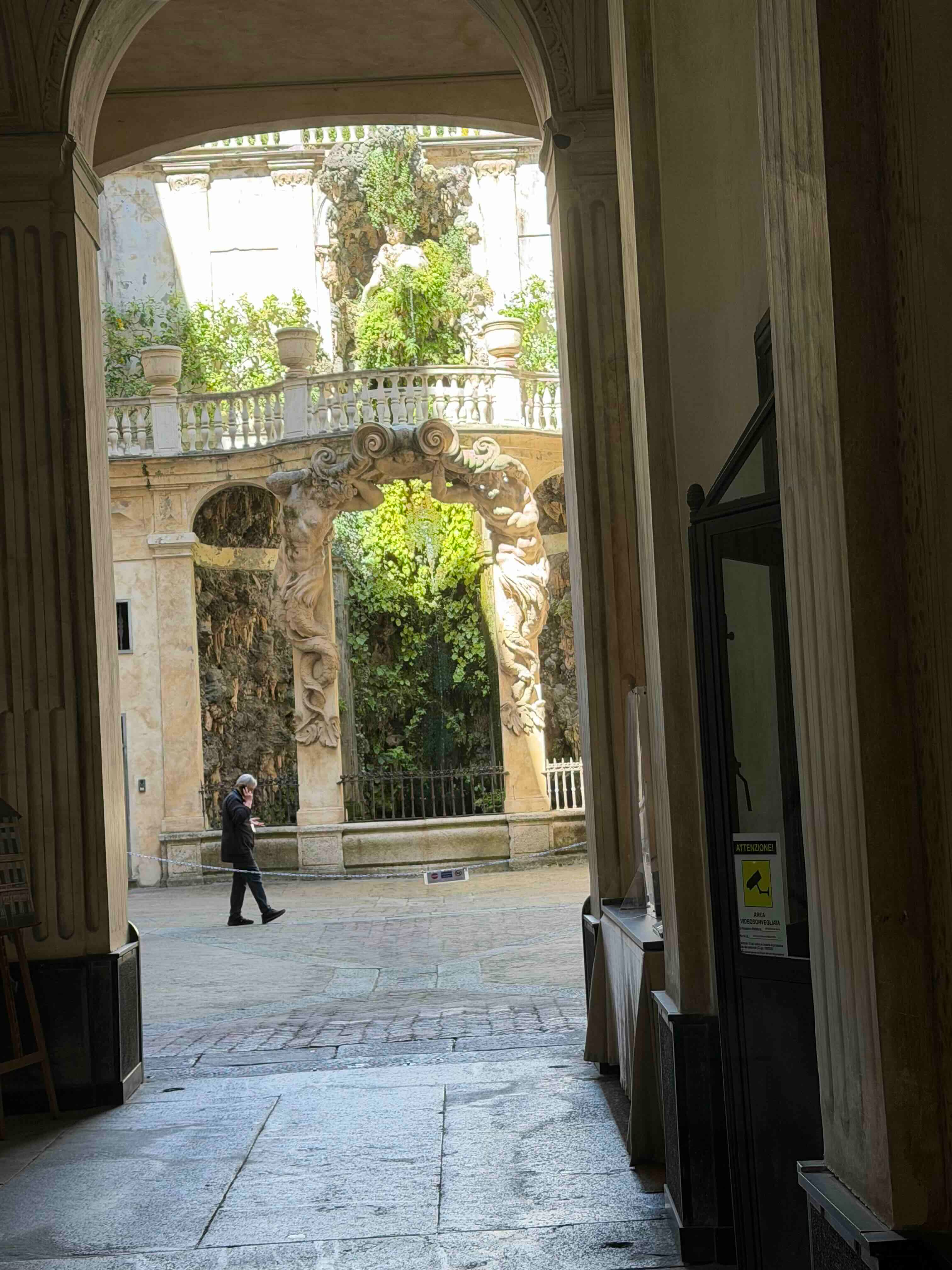
Today Genoa is a major port, container and bulk cargo terminals stretch for miles. But the center of the city still holds reminders of the riches of the Republic of Genoa.
This is the Piazza de Ferrari near the Ducal Palace. By the way, the Doge was not a hereditary title. He was elected every two years.
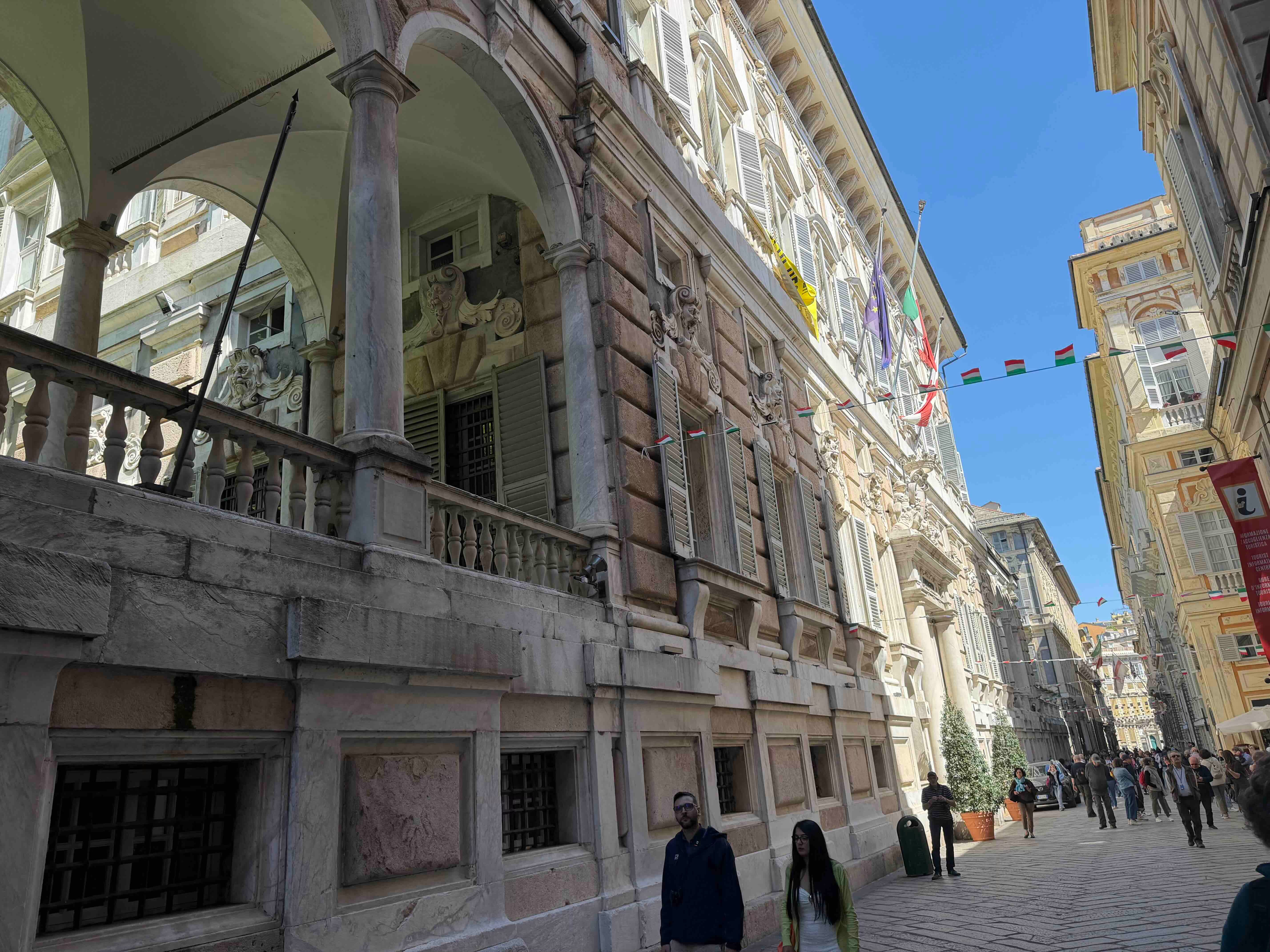
This is Palazzo Row where the rich of the Republic lived in magnificent Palaces.
Van Dyck the European
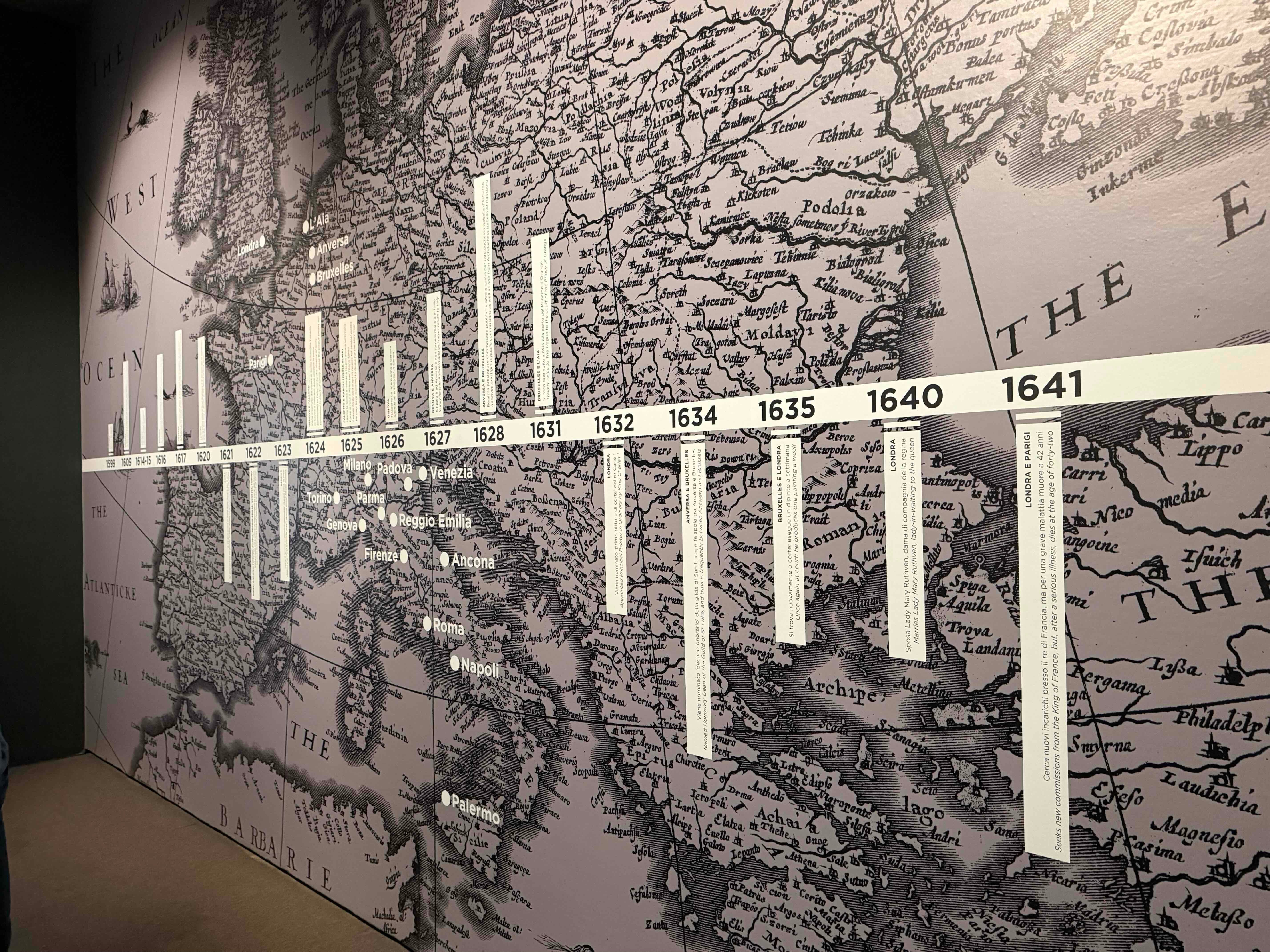
Is the title of an exhibit at the Ducal Palace. It celebrates that the Dutch painter, Anton Van Dyck, worked all over Europe, including in Genoa. This is a timeline superimposed over the map that showed where he travelled and when.
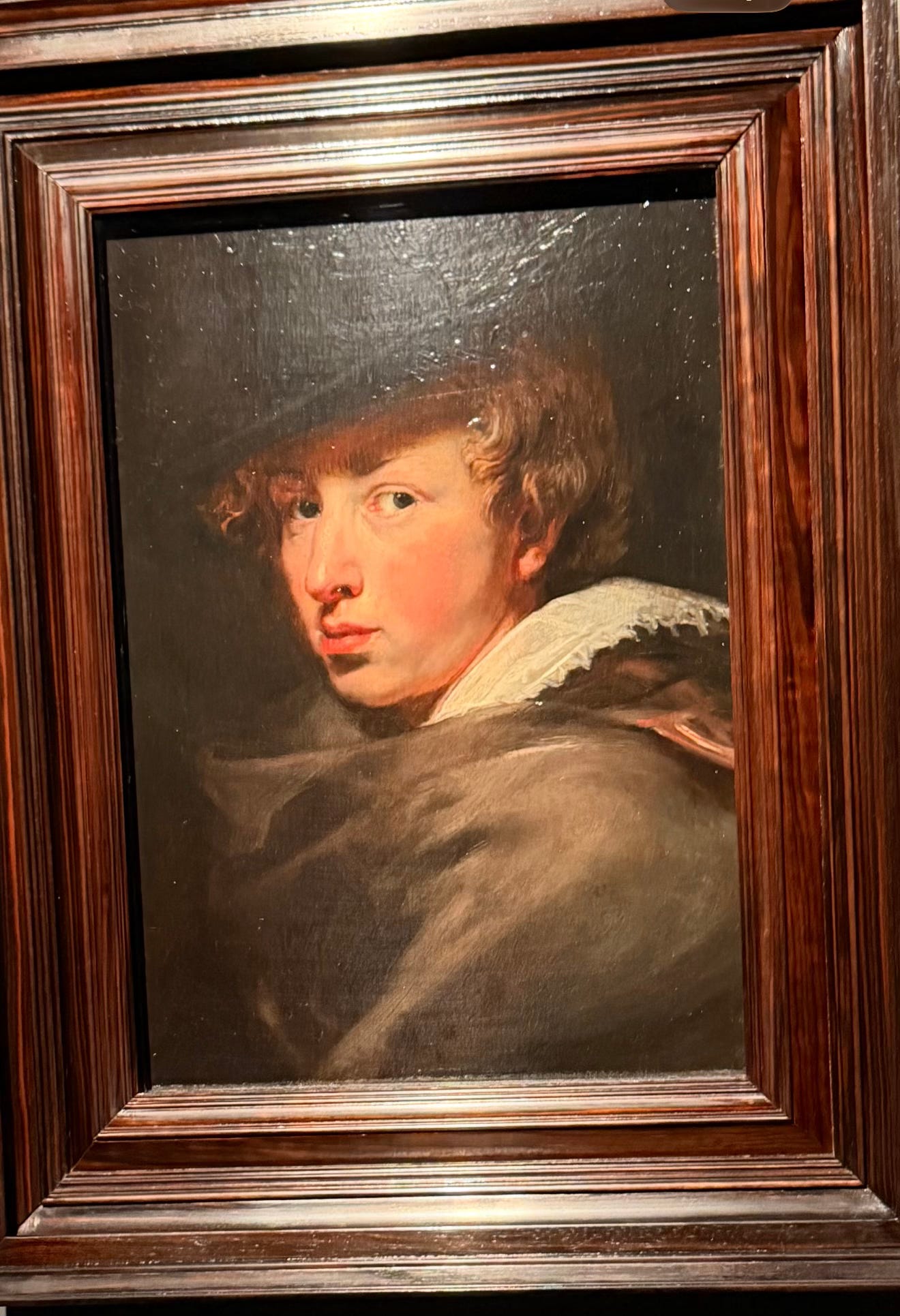
A self portrait of the artist as a young man.
Charles I, King of England, and his Queen, before he lost his head.
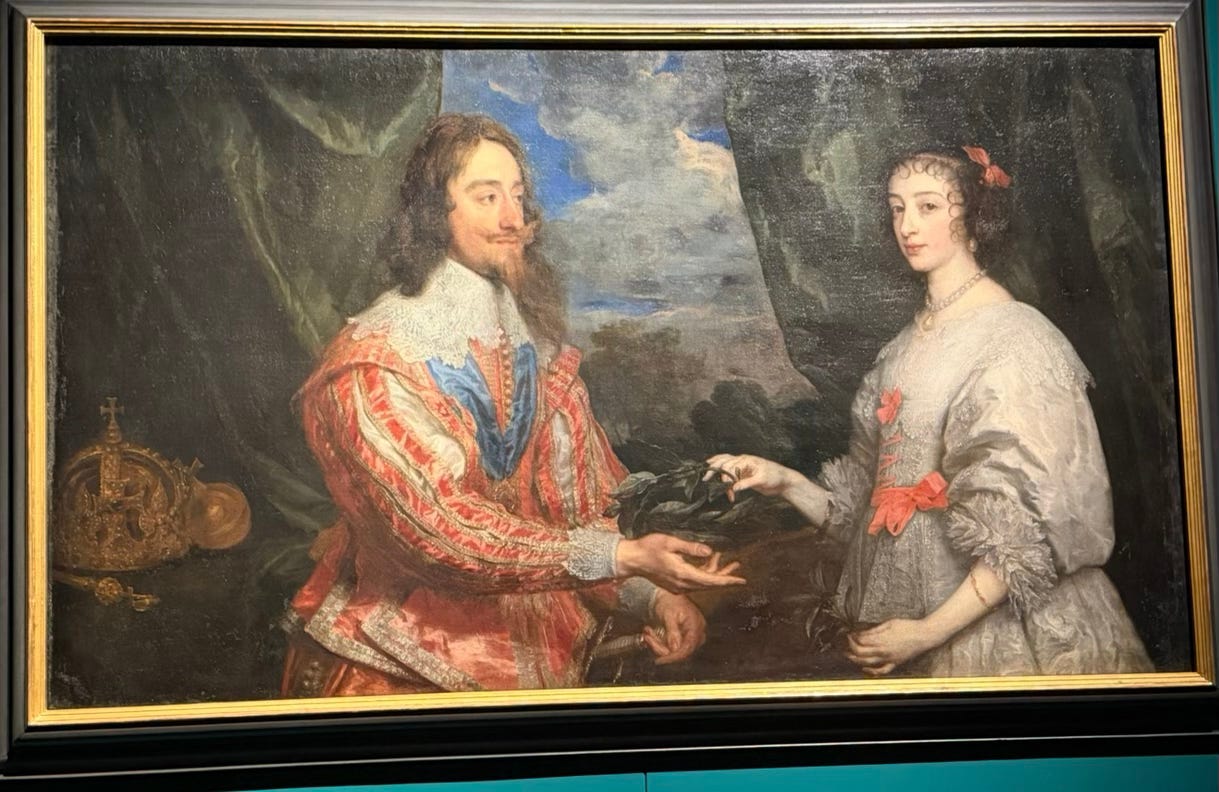
Charles V of the Holy Roman Empire
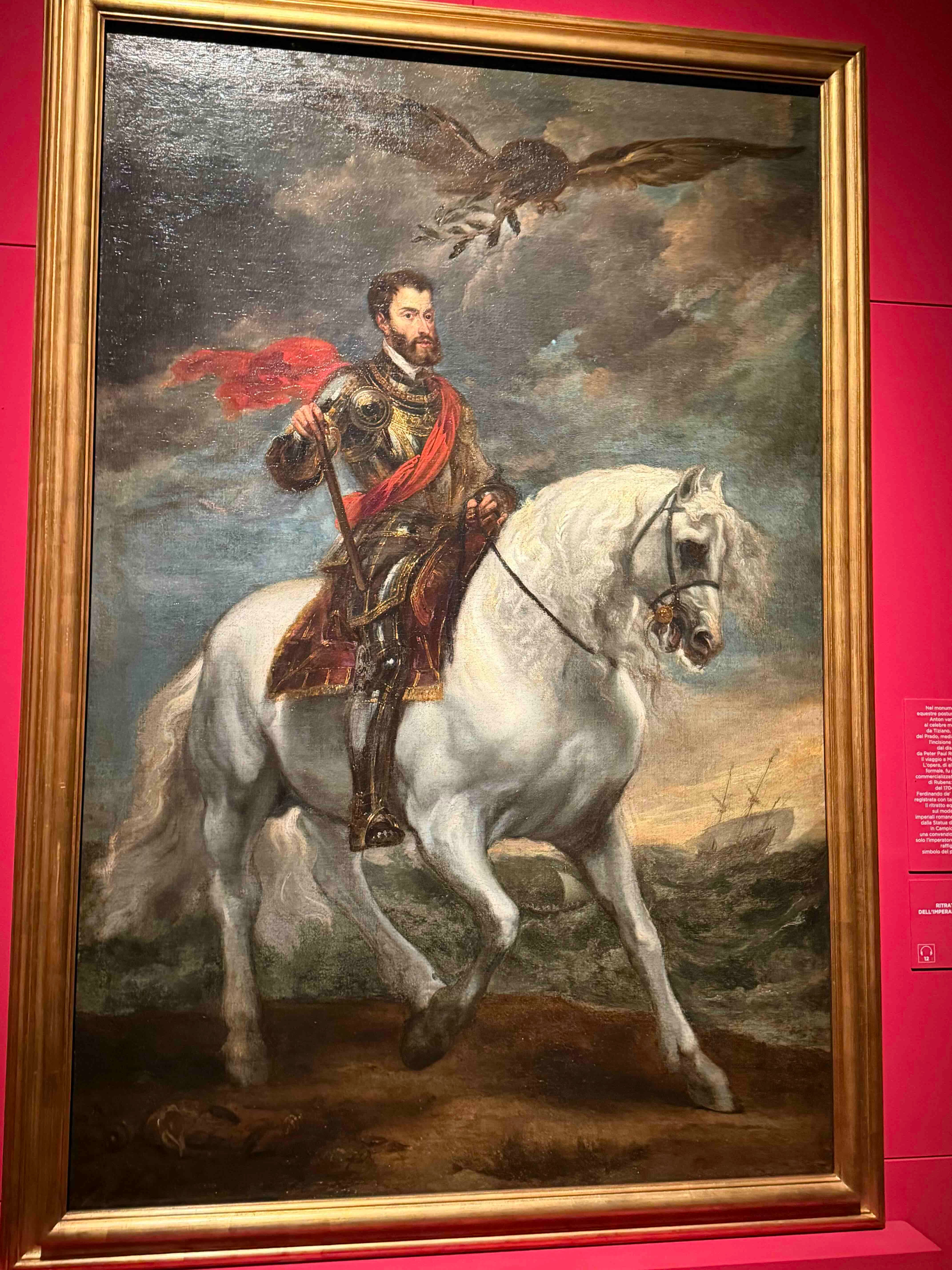
A Genoese Noblewoman
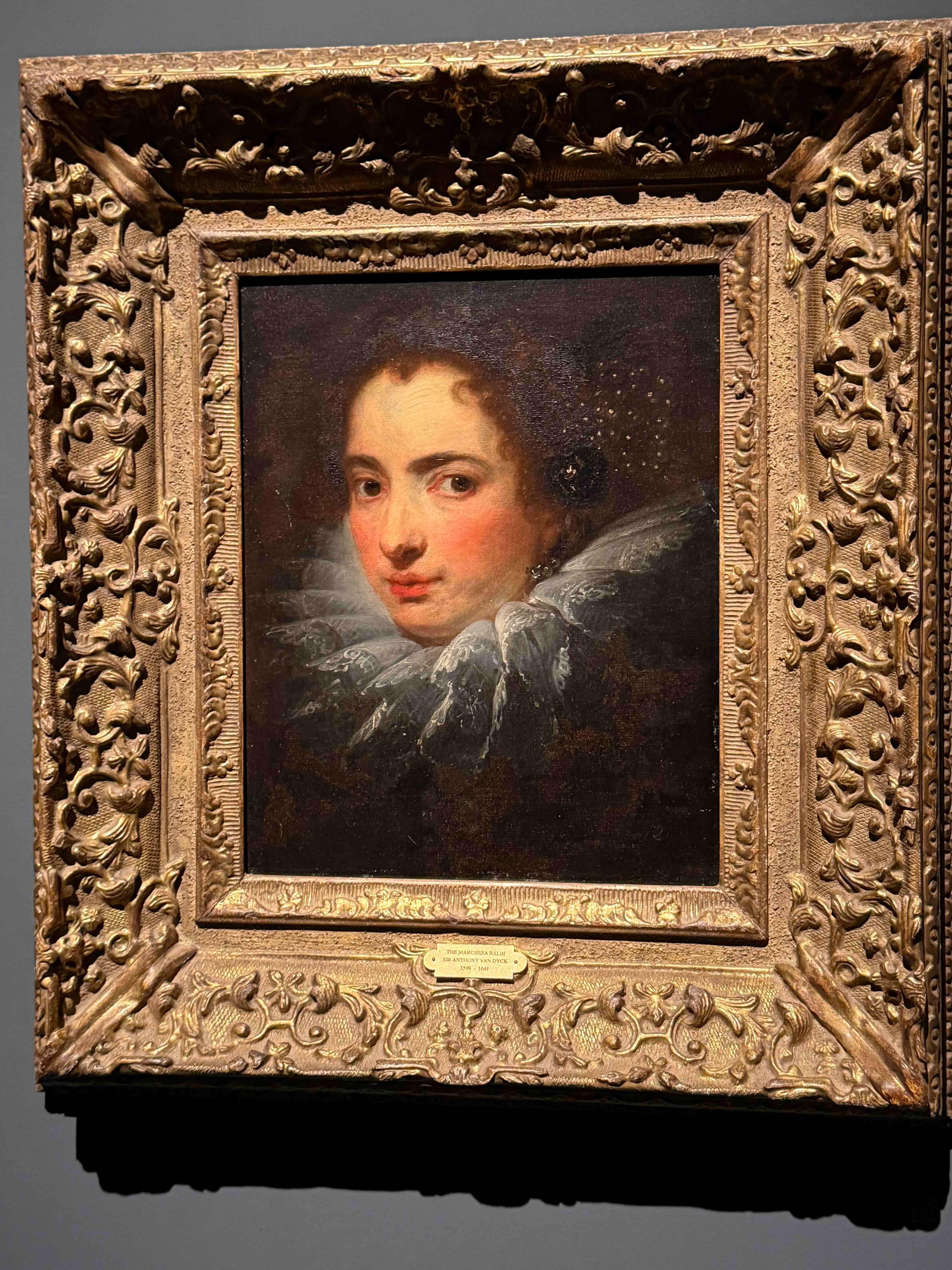
Elizabeth Howard, Countess of Peterborough
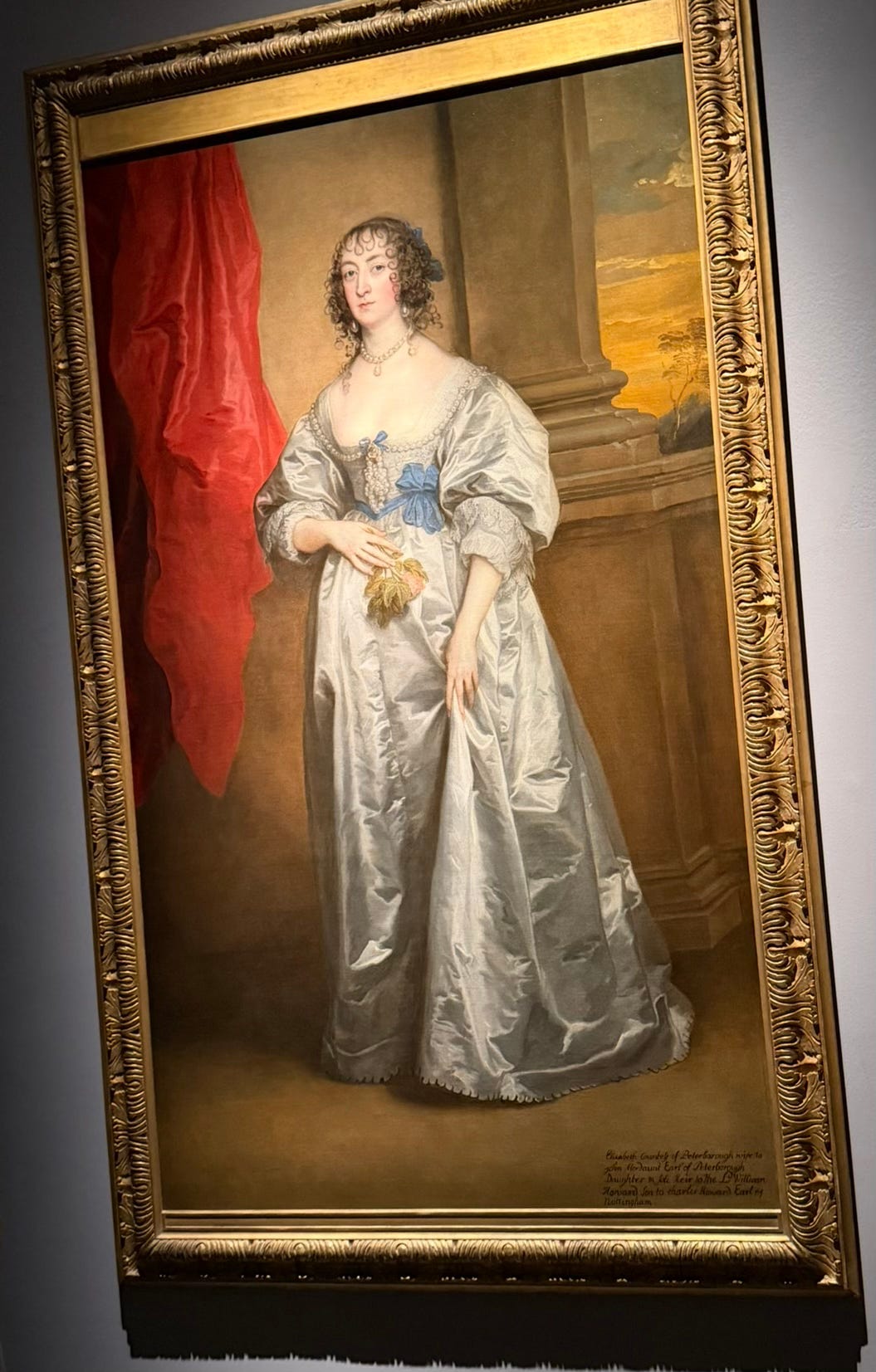
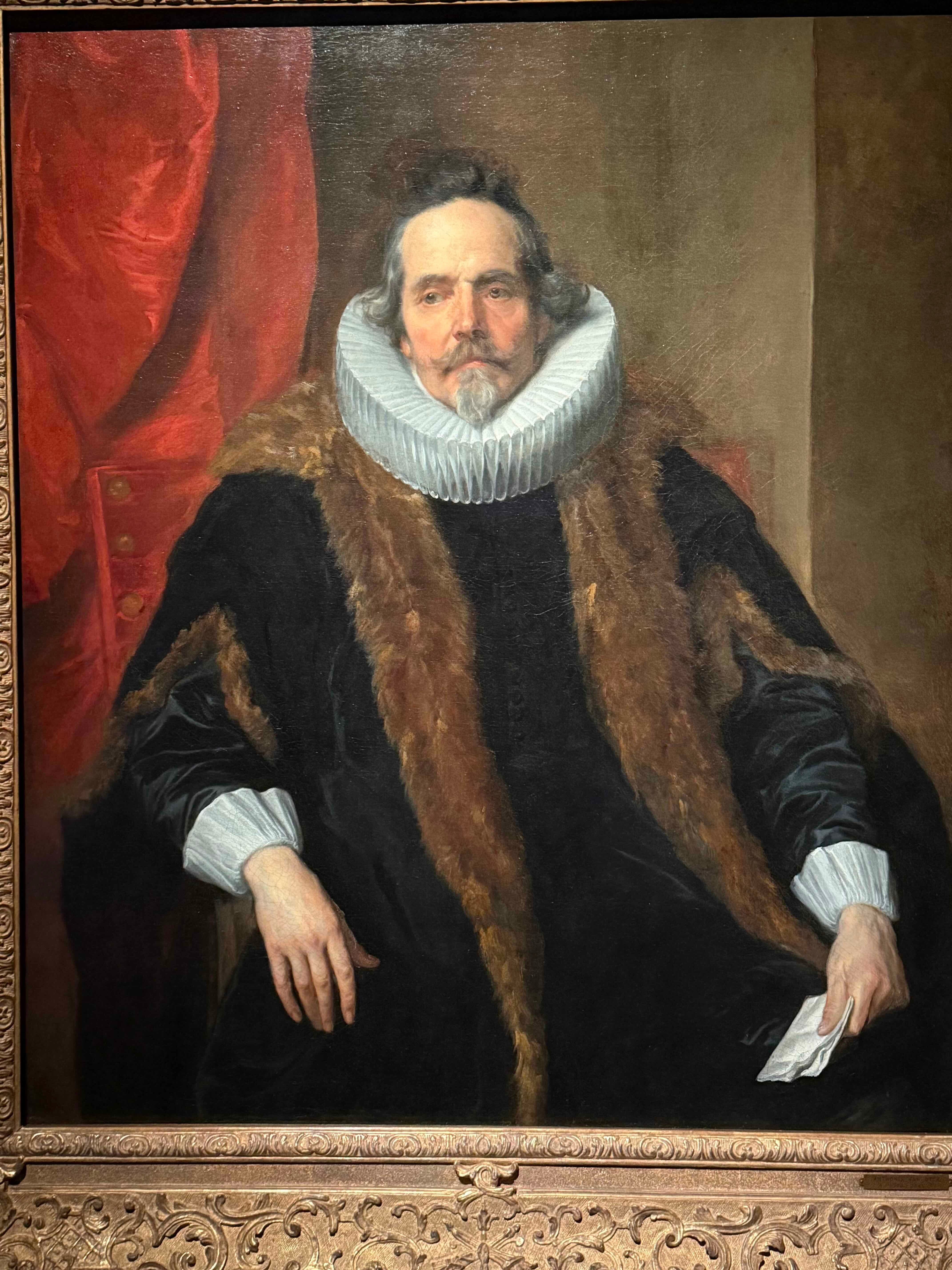
Jacques le Roy Arms Merchant
The Story of an Italian Egg
Eggs in Canada, and other countries, have a stamp on then. I never had a clue what they meant but inside an Italian egg box there is an explanation. Probably a European Union rule, since the EU is fond of rules.
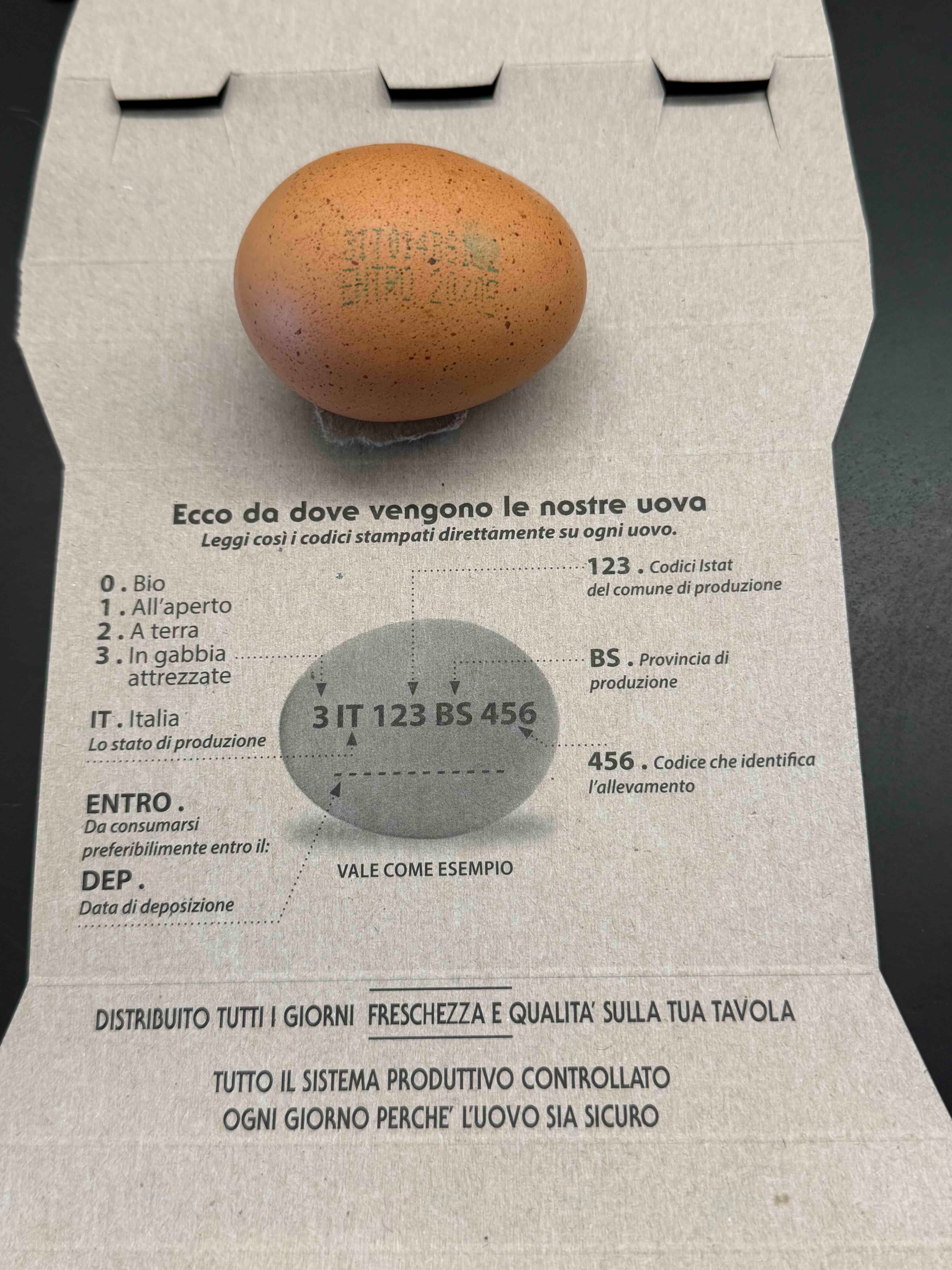
Number 3 tells you the hen laid this egg in a cage. The other numbers are various stages of free-run. IT says it comes from Italy Entro and Dep is what we would call the Due Date. The info on the right hand side says which province and town the egg came from right down to the allevamento or individual farm.
Defence Stocks
With a war on and stories of the United States running low on supplies you would think defence stocks were a good bet. But you’d be wrong.
Here is their recent performance:
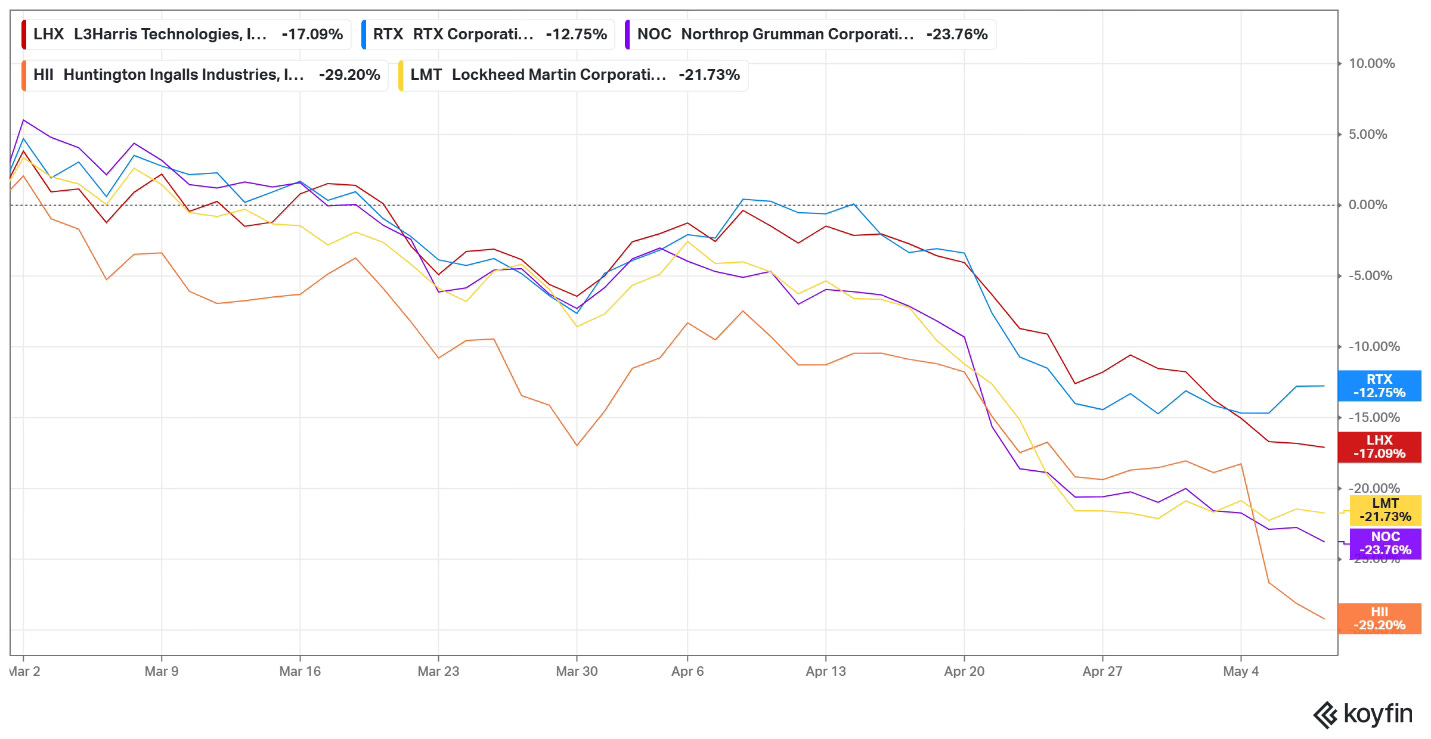
A friend of mine put it this way:
What is happening here is that the current war is showing investors that for defensive purposes, maybe you don’t need to buy the most expensive equipment. The strategy of Ukraine and Iran has centered on using comparatively cheap drone technology. If swarms of drones can keep the US Navy at bay, do you really need Huntington Ingalls to build you more submarines?
Essay of the Week
Louis Aldrovandi was an Italian immigrant who worked his way up from a job as a mechanic to inventing a type of forklift and then starting a company that manufactured a unique product. This is the story of LiftKing, his company. I wrote Louis’s book but it is in his voice. The title of the a book is A Lift to Life.
A SHORT HISTORY OF LIFT KING
Walking along a residential street in downtown Toronto in the spring of 2012, an unusual yellow machine sits behind the construction hoarding of a mansion being rebuilt from the ground up. Its mechanical tentacles stretch out bringing cement blocks, steel girders and other construction materials to those working on the building. Embossed on elegantly curved back of the machine is the name LiftKing.
The story of LiftKing is told in throughout this book, from Louis Aldrovandi coming up with the idea of adapting farm tractors to make specialized forklifts for bricklayers to giant contracts for the US military and steel plants. This chapter puts the LiftKing story in one place. Apologies if it touches on some of the things covered in more detail elsewhere.
Louis Aldrovandi started Lift King in 1968. After a short stint running a repair shop, he was awarded the International Harvester dealership for what is now known as the Greater Toronto Area. He was popular with the parent company and his dealership was the most profitable in Ontario. At one point the firm brought him to Chicago as part of a corporate reward program. When he was there, he met Cyrus McCormick, the legendary owner of International Harvester and descendant of the founder.
The trouble with Louis’s success was that it made other dealers jealous. Louis’s specialized adaptions of tractors were taking business away from them. It was as if one McDonalds restaurant in Toronto was modifying the recipe and attracting so many people the other McDonalds outlets were losing business. Louis lost his franchise.
Without missing a beat, he switched to rival tractor maker Case but he was only able to acquire the dealership for Oshawa. Then as now, the center of the action was Toronto so the construction firms travelled to Oshawa to do business with Louis. Soon the other Case dealers were complaining that Aldrovandi was infringing on their territory, when in fact it was the customers coming to him.
Again, he lost the dealership. He then began buying tractors from a Case dealer in Stouffville north of Toronto. Louis modified the tractors and sold them into the Toronto area. Once again there were complaints and Louis switched and bought tractors from a Case dealer in Henrietta, New York. Because of the 1965 Auto Pact agreement there was virtually free trade between Canada and the United States in this type of equipment at the time.
Case showed a kind of reverse entrepreneurial spirit and soon put an end to that deal. Louis then started doing business with Massey Ferguson, which welcomed his business and didn’t complain about modifying its equipment and selling into other dealer’s markets. It hardly mattered since the other dealers were not selling the same end product, a tractor modified to be a rough terrain or construction site forklift.
Massey Ferguson was more than willing to sell him all the farm tractors he wanted but by then he really wanted the powertrain more than the name. So, it was never really called it a Massey Ferguson forklift, it was a LiftKing forklift.
The secret to Louis’s success as an entrepreneur is hard work and a stubborn streak, the refusal to give in when failure seemed a possibility.
“He is determined in the way that most successful men are. You could call it stubborn,” says his son Mark with a laugh. “You could even say pig-headed depending on how angry you are with him that day. He always thought if somebody else could build it for ten bucks, why couldn’t he? I think that was more his philosophy, the challenge.”
Many people would have caved in when giants such as International Harvester and Case said you have to play by our rules. Once he started operating under the LiftKing name, Louis lost money for the first three years. But he was unwavering in the conviction that his original idea, while simple in concept, was something no one else thought of.
Louis knew he could do more than just adapt International Harvester’s industrial tractors for use as forklifts. It turned out to be an astute move on a number of levels. Not only did Louis succeed in building LiftKing into a successful company that is still thriving today, but International Harvester was in fact on its last legs and no one knew it. Within a decade, companies such as IH and Massey Ferguson would be gone or merged into larger firms. There is no doubt that Louis Aldrovandi made the right decision when he left the world of the dealership and struck out on his own.
As we know, the secret to the niche he discovered was that no one else was building something bricklayers needed to lift loads of bricks up to scaffolding as well as giving carpenters easy access to lumber. Most of those bricklayers were Italian, so Louis was able to communicate with them. When they came in to have their machine repaired or serviced, he could find out what they liked about the machine and what might need further modifications.
There were other forklift trucks out there but almost all of them were built to run on a flat cement floor in the controlled environment of a warehouse. The Aldrovandi designed machines could operate in the relatively rough terrain of a construction site.
In the late 1970s LiftKing expanded in a hurry. Louis moved quickly when the Massey Ferguson forklift plant in the United States was being shut down. He struck a deal to buy the assets of the firm, as we detail elsewhere. That catapulted him into the next level because he got engineering drawings and sheets and fixtures and a 50-dealer network.
Now instead of ordering tractors from International Harvester, Case or Massey Ferguson he was ordering raw steel. Running his own manufacturing operation meant new levels of complexity, but years of experience on giant construction projects had taught Louis how to deal with large scale operations.
LiftKing expanded its product line from the standard models that were the basis of its product line. At this stage the farm and industrial tractors they were based on couldn’t do the job. The engines didn’t have enough horsepower and the axles in many cases were not strong enough for the demands made on the machines in the field. Louis needed the flexibility offered by purchasing and designing components such as engines, transmissions and axles for each model as the product line grew.
“We were able to make almost everything ourselves. Back then the two-wheel drive forklift which was all that was really being built on the agricultural chassis,” says Louis Aldrovandi. “The only way to make it a four-wheel drive forklift was to get an engineer to design it from scratch, buy one engine, one transmission, one axle, one hydraulic pump and everything else that goes with it so it came as one nice package.”
Though Louis was managing the operation, he wasn’t above getting hands dirty. He relished going into to the shop to help with a job such a changing a clutch. It gave him an opportunity to talk to the customers—often in Italian or fluent Spanish he picked up in six years in Colombia. Those one-on-one contacts allowed him to come up with ideas to improve his products.
At first most of the business was selling the specialized rough terrain forklifts for use on construction sites. Growth came gradually as LiftKing received orders for more complex equipment. Louis had to hire more workers for the plant as well as engineers, and specialists to run areas such as purchasing and writing operating manuals.
“We went from zero to thirty million dollars a year in a relatively short period of time, but relatively short means several years,” said Louis. He said at its peak the company employed 235 people, a substantial number of them engineers.
One great leap forward came in 1986 when LiftKing got its first U.S. military contract. At the time it was the largest machine the company had built.
“It was also a ‘Triple A’ type of customer that you could really hang your hat on, a feather in your cap,” says Louis. “Once we got in their good books, they started asking, `now that you can built that, can you build this one a bigger one, a more specialized one’ and that really opened the door to our ability to truly offer one of the largest lines of rough-terrain forklifts with respect to our competitors.”
Another big jump came in the early 1990’s when LiftKing went into the transporter business, a type of specialized equipment that demanded precision engineering. A typical forklift would cost be anywhere from $50,000 to $150,000. The transporters were basically for steel mills and shipyards and they would start at about a half a million dollars and go to a million and a half.
“The amount of capital, engineering and expertise that you needed was really quite a bit different and that’s why for the first 5 years we lost our shirts,” says Louis. “Trying to design something that you’ve never built before that runs 24/7 in places like shipyards and steel mills is tough. I would say it took us five years to make a dollar.”
Customers included Dofasco, Algoma, and NUCOR, US Steel, some of the world’s largest steel firms. Steel mill transporters would move from 150 to 300 tons of finished product from the mill to shipping areas. The slag pot carriers would move the molten slag from the furnace to the recycling area where it was dumped, left to cool and then recycled back into the steel making process.
Shipyard transporters, working in yards such as Ingalls, were in many ways even more impressive. They could shift entire sections of ships with some of the `pieces’ weighing up to 500 tons.
Alcoa the world’s largest aluminum company was another customer. When Alcoa moved huge heavy dies inside rolling mills standard forklifts couldn’t do the job. Among other things their wheelbase was too long. Same story in automotive stamping plants, the place where giant machines create things like doors and hoods to ship to assembly plants. LiftKing machines were used there as well.
To give an idea of the size we’re dealing with, the machine that stamps the doors for a 2011 Chevrolet Impala weighs 20-40 thousand pounds and has to be moved in a very confined space.
“In the year 2000 we made another strategic purchase of the LULL product line. It made something that we didn’t have, tilt/telescopic booms. They’re the kind of forklifts where the boom goes in and out and not only up and down. They’re almost like cranes but they have forks on them. So, we purchased that and it meant we had a little bit more to offer as a complete package to our dealers,” said Louis.
Around 2005 LiftKing went into the regular forklift business when it bought a company called Lowery in Georgetown, Ontario, west down Highway 407 from LiftKing’s main plant. Most manufacturers do not build machines that can handle more than nine tons. Lowrey’s niche is that its machines start at nine tons and go up to 20 tons.
If you had set out to train someone to run a large manufacturing operation you would never have done it this way: schooled in Italy, a mechanic as part of the Toronto subway construction, a mechanical supervisor on northern Canadian wilderness projects and a project manager in a giant South American hydro-electric project.
LiftKing is a different company today than when it started but it still makes products used in residential construction. Today its most popular machine is the telescopic boom, which is handier for building modern houses.
“Now the houses all have the fancy fronts with the stonework or the walkout or the gables or the different pitched roofs so the house is no longer as square as it used to be so they need to be able to reach in and out from a stationary position as opposed to only up and down,” says Louis. “A carpenter or contractor has to be able to move things into the middle of the house so the telescopic boom has been doing that job for the last 15 years or so.”
The cost of those machines, in the $80 – $100,000 range hasn’t changed that much over the years when you factor in inflation. However, the bread and butter of the business is now much larger machines that are in high demand from the military and the United Nations.
On a steaming hot beach in Haiti, a large machine painted United Nations white moves 20-foot containers filled with life-saving equipment for the devastated country. It is only a few weeks since the earthquake struck Haiti in 2010 and six rough terrain vehicles from Lift King ordered by a United Nations agency are already working in Haiti.
Those machines were originally designed for the US military and the drama surrounding that first contract is described in some detail elsewhere.
Whether it is rescue missions in Haiti or wars in Iraq aircraft can carry only so much. The rest goes by sea and it is often unloaded at places where there are no cranes to handle the containers. In the case of Haiti, even the docks were devastated by the earthquake. These machines can operate in sand, mud or any rough terrain and they are four-wheel drive
“In sand you need 4-wheel drive. With the 20, 40 and now the 53-foot containers you need that type of a forklift. And obviously when you have that equipment in the case of a natural disaster,” says Mark Aldrovandi standing beside one of the machines at the company plant north Toronto just before it and others were shipped to Haiti in 2010.
“The United Nations needs these machines in many places but the need was more acute in Haiti because the port was all but destroyed in the earthquake. In fact, there was no longer a port.”
The machines are called the LK50C with the ‘C’ standing for Container handler and the 50 stands for 50,000 pounds. They sell for around $600,000 and they lift approximately 50,000 pounds of weight.
IN 2006 Louis Aldrovandi sold his controlling interest to a publicly traded American firm called Manitex International traded on NASDAQ. The company operates as Manitex-LiftKing and Mark Aldrovandi runs its Canadian operation.
“My health wasn’t good enough to keep going,” said Louis of his decision to let go of the business he built.
One of the things that worried him at the time was what would happen to his workers, almost all of them long term Lift King staff; many of them joined the company in its early years. Louis made sure they were protected or at least assured of a good package if they were let go. As it turned out few of them were since the company was in a niche market and continued to prosper. Louis Aldrovandi came up with the concept of ethnic diversity long before it became the politically correct thing to do.
“Today we have as 25 if not 30 different nationalities working for us. So, it was irrelevant. He was an immigrant himself. He thought who cares if you speak the English language or are of a Canadian background, if you’re a welder and you can weld in Pakistan, you can weld in Toronto. If you’re a mechanic in Timbuktu the engines are the same whether you are there or here,” says Mark Aldrovandi. “It never really dawned on us for one second that we want to try to hold back in any way the immigrant. If anything, we were more attracted to them than not.”
Though he sold the company he kept ownership of the building that houses LiftKing as well as 10 other buildings all part of the 17-acre industrial park he built around his original site. Far from being the isolated tract of land it was when he first bought it; it now sits just a short drive north of Highway 407, the toll road that runs across the top of Greater Toronto.
The property is now worth three times what the company was sold for in 2006. Not bad for a young Italian mechanic who arrived in Toronto with a few hundred dollars in his pocket.